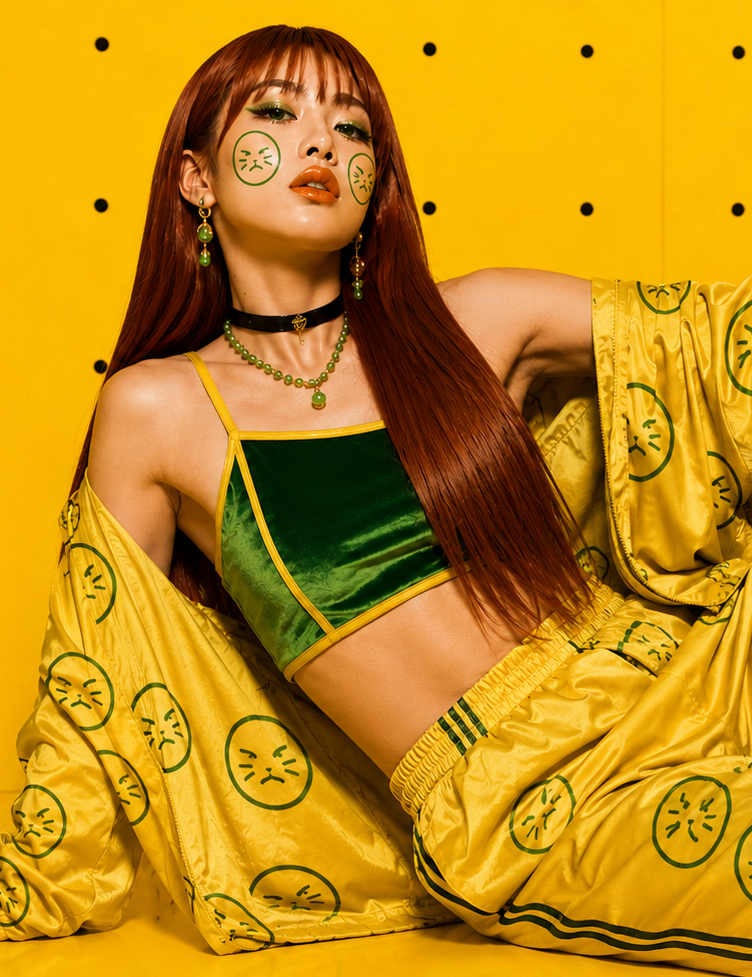
The Japanese Neo Pop Movement
The Japanese Neo Pop movement emerges at the intersection of contemporary Japanese culture, manga aesthetics, urban mythology, contemporary sculpture, fashion influence, and global visual culture. Rooted in Japan’s evolving artistic identity, the movement explores the fusion between ancestral references and futuristic imagination through immersive contemporary artworks. Through artists associated with Studio CrazyNoodles founded by Hiro Ando , Japanese Neo Pop has progressively developed into a structured visual language recognized by collectors, designers, and contemporary art audiences internationally.
Origins of Japanese Neo Pop
The Japanese Neo Pop movement emerged from the transformation of contemporary Japanese visual culture during the late twentieth and early twenty-first centuries. Influenced by manga, anime, urban life, fashion, cinema, technology, and traditional Japanese symbolism, the movement developed as a new artistic response to globalization and digital culture. Japanese Neo Pop artists sought to create works capable of merging emotional storytelling with instantly recognizable contemporary imagery. Unlike purely conceptual contemporary art, Japanese Neo Pop embraces accessibility, visual impact, and cultural hybridity while maintaining strong artistic depth. The movement reflects modern Japan itself: a society where ancestral traditions coexist with hypermodern urban environments, global pop influence, and evolving digital identities.
From Superflat to Neo Pop
While the Superflat movement introduced Japanese pop aesthetics into the global contemporary art scene, Japanese Neo Pop represents a new evolution of this visual language. Rather than focusing exclusively on flat surfaces and graphic compositions, Japanese Neo Pop expands toward Japanese Neo Pop sculpture, immersive installations, reflective materials, and multidimensional visual experiences. The movement integrates manga culture, contemporary fashion, cinematic atmospheres, luxury aesthetics, and urban mythology into a more emotionally layered artistic universe. Through stainless steel sculptures and immersive contemporary forms, Japanese Neo Pop artists increasingly explore identity, transformation, isolation, resilience, and collective memory through highly recognizable contemporary symbols. Iconic universes such as the SamuraiCat series contribute to the emergence of a new visual mythology rooted in both Japanese heritage and global contemporary culture. This evolution allows the movement to connect both with traditional contemporary art collectors and with younger generations shaped by global visual culture.
Studio CrazyNoodles and the Structuring of the Movement
Founded by Hiro Ando, Studio CrazyNoodles has played a central role in the development and international structuring of the Japanese Neo Pop movement. More than a traditional studio, Studio CrazyNoodles operates as a creative platform bringing together artists who explore the intersections of contemporary Japanese culture, Neo Pop aesthetics, sculpture, manga imagery, fashion influence, and urban visual language. Through coherent artistic direction, controlled production, curatorial development, and long-term series construction, the studio contributes to the emergence of a recognizable Japanese Neo Pop identity within the international contemporary art market. As a European platform for Japanese Neo Pop, Galerie Jacob Paulett actively supports the international visibility of the movement through exhibitions, curatorial projects, and collector engagement focused on . Studio CrazyNoodles also collaborates closely with a leading network while developing its own ecosystem of artists through the section and international collector initiatives such as the platform. Studio CrazyNoodles therefore functions as a bridge between Japanese artistic culture and global collectors, reinforcing the visibility of Neo Pop as an evolving contemporary movement.
THE TWELVE CREATIVE WORLDS AND IMMERSIVE NEO POP ENVIRONMENTS
Through The Twelve Creative Worlds, Studio CrazyNoodles extends Japanese Neo Pop beyond individual artworks into immersive visual ecosystems.
These environments combine architecture, color, storytelling, sculpture, painting and contemporary Japanese culture to create distinctive artistic territories where artists and narratives evolve within a shared creative framework.
Hiro Ando and Contemporary Japanese Pop Sculpture
Hiro Ando is considered one of the leading figures associated with the evolution of contemporary Japanese Neo Popsculpture. Through iconic stainless steel sculptures such as SamuraiCat, WarriorCat, Sumocat, and Urbancat, he combines samurai heritage, manga aesthetics, contemporary urban culture, and futuristic visual codes into highly recognizable sculptural forms. His mirrored stainless steel surfaces transform each artwork into an immersive visual experience where reflections continuously alter the perception of the sculpture. By integrating traditional Japanese symbolism with global contemporary aesthetics, Hiro Ando creates a distinctive artistic language that bridges historical memory and modern visual culture. His work has contributed significantly to the expansion of Japanese Neo Pop beyond painting into the field of contemporary sculpture and immersive visual environments.
Japanese Neo Pop Artists
The Japanese Neo Pop movement brings together artists exploring contemporary Japanese identity through diverse visual languages rooted in manga culture, urban mythology, contemporary sculpture, fashion aesthetics, and global pop imagery. Alongside Hiro Ando, artists associated with Studio CrazyNoodles contribute to the expansion of the movement through highly distinctive artistic universes. Yoshihiro Fujita explores fragmented manga perspectives and psychological perception through painting and sculptural eye compositions. Ryoko Watanabe creates urban scenes where geishas and sumotori evolve within monochromatic metropolitan environments. Tomomi Mishima combines schoolgirl imagery, luxury fashion influence, neon aesthetics, and contemporary consumer culture. Aya Toshikawa develops dreamlike kawaii-inspired figures oscillating between innocence and sensuality. Jimmy Yoshimura merges manga references, Harajuku fashion, historical imagery, and contemporary graphic composition into multilayered Neo Pop narratives. Together, these artists contribute to the growing international recognition of Japanese Neo Pop as a coherent contemporary movement.
Neo Pop Between Manga, Fashion and Contemporary Art
Japanese Neo Pop exists at the crossroads of multiple contemporary cultural influences. The movement draws from manga aesthetics, anime culture, luxury fashion imagery, urban architecture, digital environments, music culture, and contemporary art theory to construct immersive visual worlds reflecting modern society. Unlike traditional artistic categories, Japanese Neo Pop embraces hybridity and fluidity between disciplines. Artists associated with the movement frequently integrate references to street culture, cinematic storytelling, luxury branding, technology, and social transformation into their artworks. This multidimensional approach allows Japanese Neo Pop to resonate not only within the contemporary art world but also across fashion, design, music, and global visual culture. As contemporary audiences increasingly consume images through interconnected digital ecosystems, Japanese Neo Pop reflects the emergence of a new international visual language rooted in Japanese cultural identity.
JAPANESE NEO POP TODAY
Today, Japanese Neo Pop continues to evolve through contemporary sculpture, painting, immersive environments, design collaborations and experimental visual culture.
Through Studio CrazyNoodles and its international network of artists, collectors and cultural partners, the movement expands beyond traditional artistic categories while maintaining a strong connection to contemporary Japanese identity.